Introduction
Overtraining. Exhaustion. Short-lived motivation.
These have simply become the new fitness craze- among busy workers, gym attendees, and even advanced weight losses in the urban centers such as Indore, where quick gains are taking precedence above healthy lifestyles.
But here the simple truth is, fitness exhausting you is not fitness that supports you.
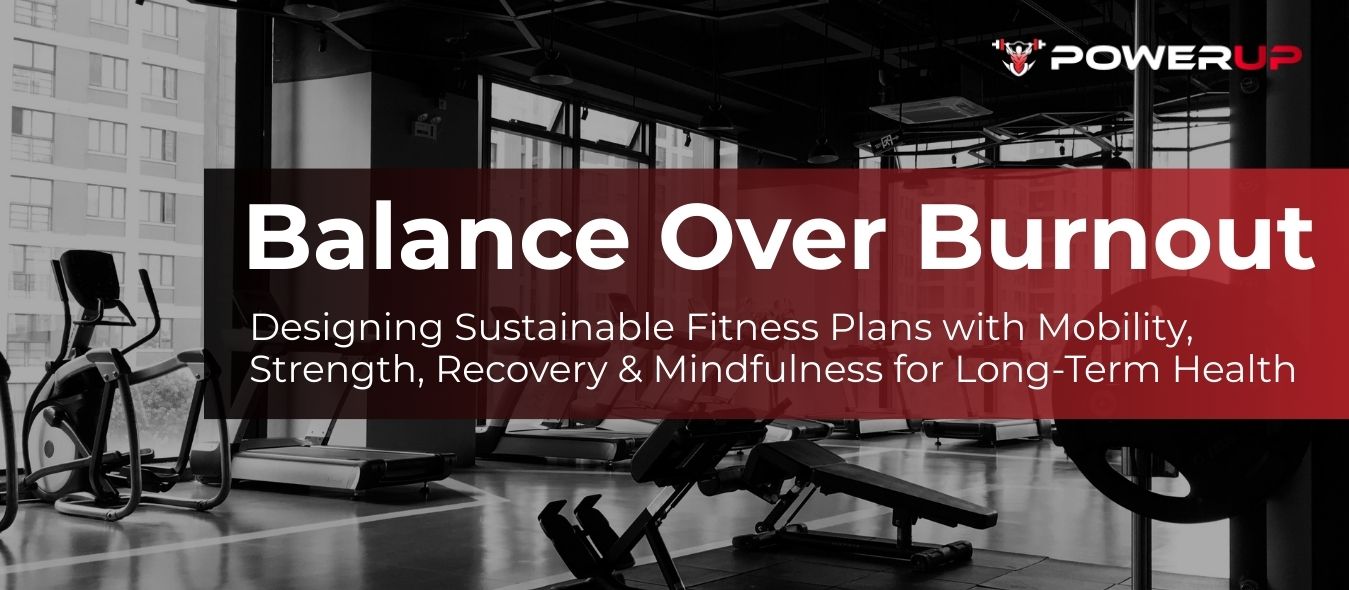
Introduce the new-age training philosophy Balance Over Burnout, a philosophy redefining the way in which people create a sustainable fitness plan in 2026. Rather than hard work or intermittent training, the emphasis is moving to a more intelligent combination of movement, strength, rest, conditioning, and meditation.
This complete plan does not only provide you with tangible physical outcomes but it also makes you remain mobile, pain free, energized and regular throughout life.
Let’s break down how to design a sustainable, long-term fitness strategy that supports your body–not fights it.
What is a Sustainable Fitness Plan in 2026?
A sustainable fitness plan 2026 is a training framework designed around longevity, not just performance spikes. Instead of pushing your body to its limit every day, it uses structured methods that balance:
- Strength training
- Mobility/flexibility work
- Recovery cycles
- Mindfulness and stress regulation
- Functional conditioning
- Lifestyle alignment (sleep, nutrition, habits)
Compared to the old-fashioned regime of fat-burning or muscle-building, sustainable fitness protocols can assist you in enhancing the quality of life in general, such as the way you stand, the health of your joints, the way you feel, and your psychological condition.
Today’s best gyms–including leading facilities in Indore like PowerUp Fitness Gym–are incorporating these principles to help clients achieve results that last years, not weeks.
Why Sustainable Fitness Matters in 2026
The fitness world looks way different than it did five years ago. What people want now is fitness that lasts, not quick fixes that lead to burnout.
Here’s why this matters:
-
People are tired of constant challenges
Those 30-day makeovers and tough boot camps often don’t work. They can cause injuries and mental stress.
-
Rest is now seen as part of getting better
Getting enough sleep and active recovery are viewed as just as important as workouts for building muscle and losing fat.
-
Moving well is a must
With so many people working on laptops, staring at phones, and sitting for long stretches, pain and stiffness are on the rise. Being able to move freely is more important than ever.
-
Fitness tech needs better plans
Tools that track things like heart rate and recovery are helping people work out smarter.
-
The fitness scene in India, especially in Indore, is moving toward overall wellness.
Gyms are turning into places that offer strength training, yoga, physical therapy, and areas for recovery.
Basically, 2026 is all about fitness that’s balanced. It’s about keeping you healthy for a long time.
Deep Breakdown of a Sustainable Fitness Plan
1. Mobility: Building the Foundation of Longevity
Why Mobility First?
Mobility improves range of motion, reduces injury risk, and increases strength potential. Without it, your lifts plateau, and your workouts become inefficient.
Key Elements of Mobility Training
- Dynamic warm-ups
- Joint mobility drills
- Thoracic spine rotations
- Hip openers
- Ankles + wrists strengthening
- Movement prep for lifts (pre-activation)
Mobility Prescription
- 5–10 mins before strength workouts
- 20–30 mins standalone session (2–3x per week)
2. Strength Training: The Core of a Balanced Gym Routine
Why Strength = Sustainability
Strength training improves:
- Bone density
- Muscle mass
- Metabolism
- Joint stability
- Longevity markers
Modern Strength Protocol for 2026
A balanced strength block includes:
- 2 lower-body days (squat/hinge focus)
- 2 upper-body days (push/pull focus)
- Progressive overload
- Injury prevention exercises
- Tempo variations
- Unilateral (one-sided) training
Why This Matters in Indore
Sedentary jobs + long commutes = tight hips, weak glutes, stiff backs.
Strength offsets all of this.
3. Functional Conditioning: Fitness That Transfers to Life
Conditioning Doesn’t Mean Killing Yourself
Instead of HIIT every day, 2026 programming uses:
- Zone 2 cardio
- Low-impact circuits
- Short metabolic finishers
- Hybrid training (strength + conditioning)
This keeps your heart healthy without overloading your CNS.
4. Recovery: The Secret Weapon Most People Ignore
Types of Recovery Needed for a Balanced Gym Routine
- Sleep optimization
- Rest days
- Active recovery: walking, mobility flows
- Soft tissue work
- Hydration + electrolytes
- HRV-based training
How Recovery Impacts Results
A well-rested body:
- Builds muscle faster
- Loses fat efficiently
- Prevents injury
- Improves mental clarity
- Increases training longevity
5. Mindfulness: The Missing Link in Modern Fitness
Mindfulness improves adherence, reduces stress hormones, and supports better recovery.
Mindfulness Tools in a Long-Term Fitness Strategy
- Breathwork
- Meditation
- Pre-lift focus rituals
- Post-workout reflection
- Journaling
Gyms like PowerUp Fitness Gym, Indore, are integrating mindfulness into modern fitness programs for sustainable outcomes.
Benefits of a Sustainable Fitness Plan
-
Easier to stay on track
-
Less chance of getting hurt
-
Better mental state and easier to handle stress
-
Great for people with packed schedules
-
Better body changes
-
Better sports performance
-
Easier to stick with it for the long run
-
Less swelling and tiredness
-
More energy and better movement
Key Elements of a Balanced Gym Routine
1. The 4-Pillar Framework
A sustainable fitness plan in 2026 requires:
- Strength
- Mobility
- Conditioning
- Recovery
This creates the perfect ecosystem for long-term progress.
2. The 80/20 Longevity Formula
- 80% sustainable workouts
- 20% hard intensity or PR attempts
This protects joints while still creating measurable progress.
3. The Weekly Layout Example
Balanced Weekly Plan
| Day | Focus |
| Monday | Lower Body Strength + Mobility Prep |
| Tuesday | Upper Body Strength + Core |
| Wednesday | Zone 2 Conditioning + Stretch |
| Thursday | Functional Strength + Power |
| Friday | Mobility Flow + Recovery |
| Saturday | Mixed Conditioning or Sports |
| Sunday | Rest |
Step-by-Step Guide to Creating Your Sustainable Fitness Plan in 2026
Step 1: Assess Your Current Fitness Baseline
Evaluate:
- Movement patterns
- Strength levels
- Posture issues
- Lifestyle constraints
- Recovery markers
- Stress levels
- Sleep quality
Step 2: Set Long-Term Goals (1–3 Years)
Examples:
- Pain-free mobility
- Healthy body fat %
- Functional strength milestones
- Improved endurance
- Better daily energy
Step 3: Build a Balanced Weekly Plan
Follow the 4-pillar framework and 80/20 rule.
Step 4: Track Metrics That Matter
- Strength PRs
- RPE (rate of perceived exertion)
- HRV scores
- Sleep hours
- Steps per day
- Mobility improvements
Step 5: Adjust Every 4 Weeks
Use deloads, recovery blocks, or intensification phases based on progress.
Step 6: Integrate Mindfulness
Examples:
- 5 minutes of deep breathing post-workout
- Daily gratitude or fitness journal
- Mindful warmups
Step 7: Reassess Every 12 Weeks
Modify goals, volume, intensity, or recovery protocols.
Real-World Use Cases / Examples
1. Busy Professionals in Indore
Sitting 8–10 hours causes:
- Rounded shoulders
- Weak glutes
- Tight hips
- Lower back pain
Solution: strength + mobility + recovery cycles.
2. Bodybuilders Avoiding Overtraining
Progressive overload + weekly recovery blocks prevent systemic fatigue.
3. Beginners Seeking Sustainable Weight Loss
Instead of HIIT daily, combine Zone 2 with strength.
4. Women Seeking Long-Term Wellness
Hormone-friendly training with strength + mobility + mindful conditioning.
5. Post-Plateau Lifters
Adding recovery phases often unlocks new PRs.
Common Challenges + Solutions
| Challenge | Solution |
| Lack of time | Hybrid sessions + mobility snacks |
| Plateauing strength | Add tempo/volume phases |
| Low recovery | Improve sleep + hydration |
| Joint pain | Mobility + technique refinement |
| Burnout | Switch to 80/20 sustainable model |
Trends & Future Outlook (2026–2030)
1. Smart Recovery Technology
HRV tracking, compression therapy, and AI recovery cycles.
2. Hybrid Training Demand
Strength + conditioning + mobility blended.
3. Movement Longevity Focus
More people are training for pain-free living, not aesthetics.
4. Gyms Becoming Wellness Ecosystems
Gyms in Indore are adding yoga, physiotherapy, and recovery sessions.
5. Mindfulness-Integrated Workouts
Breath-led strength sessions and meditation cooldowns.
6. Data-Driven Personalized Fitness
AI tools recommending daily workout intensities.
Conclusion: Your Next Step Toward Sustainable Fitness Starts Here
In a world obsessed with faster results, the real transformation comes from building a balanced, sustainable fitness plan 2026—one rooted in mobility, strength, recovery, and mindfulness.
This approach doesn’t just sculpt your body—it strengthens your health, mindset, longevity, and overall lifestyle.
If you’re in Indore, and you’re ready to build a sustainable, long-term fitness strategy designed for real-life results — PowerUp Fitness Gym offers structured mobility sessions, personalized strength programs, recovery protocols, and expert coaching to help you stay consistent for years.
Start your long-term fitness journey today. Balance always beats burnout.
FAQs
1. What is the best sustainable fitness plan in 2026 for long-term results?
A structured routine combining strength, mobility, conditioning, and recovery is ideal for long-term health and performance.
2. How many days a week should I train for a balanced fitness routine?
Most people thrive with 4–5 training days, including mobility and recovery sessions.
3. Can I build muscle sustainably without overtraining?
Yes. Progressive overload with adequate sleep, nutrition, and deload cycles ensures continuous strength gains.
4. What is the role of mobility in a sustainable gym plan?
Mobility prevents injuries, improves lifting performance, and supports long-term joint health.
5. How does mindfulness improve fitness results?
Mindfulness reduces stress, improves recovery, and enhances training focus and consistency.
6. What is the best recovery approach for long-term fitness success?
Prioritize sleep, hydration, active recovery, mobility, and regular deloads.
7. Is this approach suitable for beginners in Indore gyms?
Absolutely—balanced training is ideal for beginners and reduces injury risk.